IMPACTS OF URBANISATION
Urbanisation: Trends, Causes and Effects
Introduction
More than half of the world’s population lives in urban areas. Due to the ongoing urbanisation and growth of the world’s population, there will be about 2.5 billion more people added to the urban population by 2050, mainly in Africa and Asia. The world’s urban areas are highly varied, but many cities and towns are facing problems such as a lack of jobs, homelessness and expanding squatter settlements, inadequate services and infrastructure, poor health and educational services and high levels of pollution.
In this study session, you will learn about the trends in urbanisation and the causes of urban growth. You will also learn about the demographic, health, environmental and social consequences of urbanisation
Urbanisation trends
In Study Session 2 you learned about the overall trend in global population growth. Most of this increase is taking place in urban areas. Urbanisation is an increase in the number of people living in towns and cities. Urbanisation occurs mainly because people move from rural areas to urban areas and it results in growth in the size of the urban population and the extent of urban areas. These changes in population lead to other changes in land use, economic activity and culture. Historically, urbanisation has been associated with significant economic and social transformations. For example, urban living is linked with higher levels of literacy and education, better health, lower fertility and a longer life expectancy, greater access to social services and enhanced opportunities for cultural and political participation (UNDESA, 2014). However, urbanisation also has disadvantages caused by rapid and unplanned urban growth resulting in poor infrastructures such as inadequate housing, water and sanitation, transport and health care services.
Global trends in urbanisation
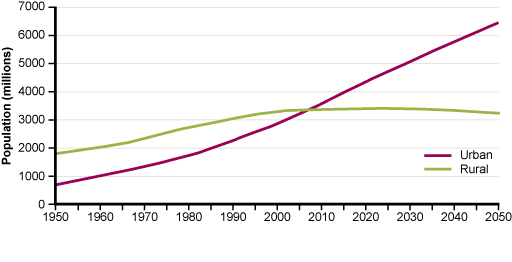
In 1960, the global urban population was 34% of the total; however, by 2014 the urban population accounted for 54% of the total and continues to grow. By 2050 the proportion living in urban areas is expected to reach 66% (UNDESA, 2014). shows the change in the rural and urban populations of the world from 1950 through to projected figures up to the year 2050.
Urbanisation in Ethiopia
Ethiopia is one of the least urbanised countries in the world today, and only 18% of its population lives in urban areas (JMP, 2014). In common with many other developing countries, however, this pattern is changing Ethiopia’s urban growth rate is more than 4.0% per year, which places it among the highest in Africa and the world (MWUD, 2007).

The rapid increase in urban populations has meant that peri-urban areas are growing much more quickly than formal urban centres. Peri-urban areas are those areas immediately around a town or city. They are areas in transition from countryside to city (rural to urban), often with undeveloped infrastructure, where health and sanitation services are under pressure and where the natural environment is at risk of degradation.
Defining the boundaries of urban, peri-urban and rural areas is not straightforward. They do not neatly separate themselves by lines on a map. On the contrary, the sprawling nature of urban development means that the areas merge into each other. The lack of a clear boundary can make it difficult to assess the size of towns by their population or geographical area. However, judgements have to be made and, for planning and administrative purposes, data on population size are collected. shows the number of towns and cities in Ethiopia by population in 2007, the most recently published data.
Of the four cities with a population of more than 200,000, by far the largest is Addis Ababa. In 2007, the population of Addis Ababa was more than 3 million, which amounted to about 25% of Ethiopia’s urban population (MWUD, 2007). The next-largest city, Dire Dawa, had only 293,000 occupants at that time. The impacts of urbanisation are generally much more evident in the capital than in other towns and cities.
Causes of urbanisation
Urbanisation in the developing world occurs for two main reasons: the natural increase of population and rural to urban migration.
Natural increase of population
From Study Session 2 you will know that the population is increasing in developing countries. This natural increase is a significant cause of the growing urban population.
Explain what is meant by natural increase of population.
As birth rates decline over time, according to the demographic transition model, the role of natural increase in determining the pace of urban population growth becomes less important in comparison to migration.
Rural to urban migration
In developing countries, urbanisation usually occurs when people move from villages to settle in cities in hope of gaining a better standard of living. The movement of people from one place to another is called migration. Migration is influenced by economic growth and development and by technological change (Marshall et al., 2009) and possibly also by conflict and social disruption. It is driven by pull factors that attract people to urban areas and push factors that drive people away from the countryside.
Employment opportunities in cities are one of the main pull factors. Many industries are located in cities and offer opportunities of high urban wages. There are also more educational institutions providing courses and training in a wide range of subjects and skills. People are attracted to an urban lifestyle and the ‘bright lights’ of city life. All of these factors result in both temporary and permanent migration to urban areas.
Poor living conditions and the lack of opportunities for paid employment in rural areas are push factors. People are moving away from rural areas because of poor health care and limited educational and economic opportunities as well as environmental changes, droughts, floods, lack of availability of sufficiently productive land, and other pressures on rural livelihoods.
Rural to urban migration can be a selective process, as some types of people are more likely to move than others. One of the factors involved is gender, because employment opportunities vary greatly with different jobs for men and women. Another factor is age. Young people are more likely to move to towns, with more elderly people and children left in rural areas. Selectivity in migration affects the population in both the rural and the urban areas. If more men move to towns and cities than women, this leaves a predominantly female society in rural areas.
Impacts of urbanisation
Although people are pulled towards the advantages of cities, the impacts of urbanisation are mixed. First we will look at the many positive impacts of urbanisation before going on to describe some of the challenges created by rapid unplanned urban growth.
Thriving towns and cities are an essential element of a prosperous national economy. The gathering of economic and human resources in one place stimulates innovation and development in business, science, technology and industry. Access to education, health, social services and cultural activities is more readily available to people in cities than in villages. In cities, child survival rates are better than in rural areas because of better access to health care (Mulholland et al., 2008). The density of urban populations makes it easier and less costly for the government and utilities to provide essential goods and services (Brockerhoff, 2000). For example, the supply of basic facilities such as fresh water and electricity can be achieved with less effort and less cost per person.
Schools, colleges and universities are established in cities to develop human resources. A variety of educational courses are available, offering students a wide choice for their future careers. People of many classes and religions live and work together in cities, which creates better understanding and harmony and helps break down social and cultural barriers. Cities also have advanced communication and transport networks.
However, these many benefits of urban life do not apply to all. Rapid population increases and unplanned growth create an urban sprawl with negative economic, social, and environmental consequences. In Ethiopia, the rate of urban growth often strains the capacity of local and national government to provide urban residents with even the most basic services of housing, water supply, sewerage and solid waste disposal (MWUD, 2008).
Housing
In developing countries, about a third of urban inhabitants live in impoverished slums and squatter settlements (UN-Habitat, 2012). Slums are urban areas that are heavily populated and have sub-standard housing with very poor living conditions, creating several problems.
In Addis Ababa, a report in 2008 found that 80% of the houses in the city were classed as slums due to the physical deterioration of its housing, overcrowding, high density, poor access and lack of infrastructure services (Tolon, 2008)
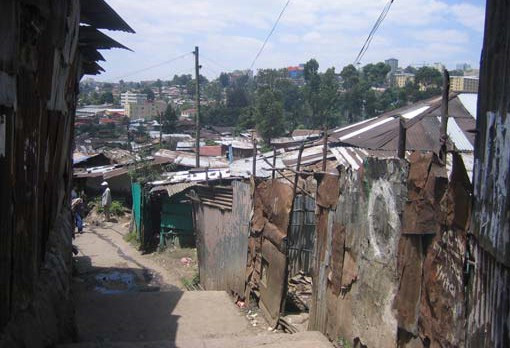
Slum areas typically suffer from:
- poor housing with small, overcrowded houses built very close together using inadequate materials and with uncertain electricity supply
- restricted access to water supplies
- little or no sanitation/latrine facilities and no solid waste disposal, which leads to a polluted and degraded local environment
- inadequate health care facilities which, coupled with the poor living conditions, increases sickness and death rates
- insecure living conditions – slum dwellers may be forcibly removed by landowners or other authorities.
Many low-income families gravitate to these informal settlements that proliferate in and around towns. Poverty is one of the most critical issues facing urban areas. Urban poverty degrades both the physical and social environment. This then makes it more difficult for people to escape from poverty and they fall victim to the ‘vicious cycle’ that you read about in Study Session 2.
Water supply and sanitation
The provision of water and sanitation services to growing urban settlements, peri-urban and slum areas presents critical challenges. The increased demand for water from the growing population can place added stress on already stretched resources. In and around cities, water is commonly in short supply and subject to increasing competition by different users. Urban growth leads to increasing demand for water for industrial and domestic use, which conflicts with agricultural demands.
It is especially difficult to provide water and sanitation services to deprived areas and the poorest people. Many people in these areas live without access to safe drinking water and proper sanitation. Even where adequate water supplies are available, sanitation and wastewater disposal are often inadequate or missing. Pit latrines and septic tanks are the usual methods for human waste disposal but they have limited capacity and are not always adequate to cope with the quantity of waste produced by many people living close together. Overflowing latrines and septic tanks contaminate surface water and create a serious health risk.
The lack of these essential services threatens not only the health and the environment of people in slum areas, but also that of people living in formal urban areas. In Africa and Asia most of the urban centres have no sewers at all, which affects rich and poor alike. This is true of many cities with a million or more inhabitants, as well as smaller cities and towns.
Wastes and pollution
Urbanisation affects land, water, air and wildlife because of the number of people, the amount of buildings and construction, and the increased demands on resources. It has impacts on the physical environment in several ways.
Water quality
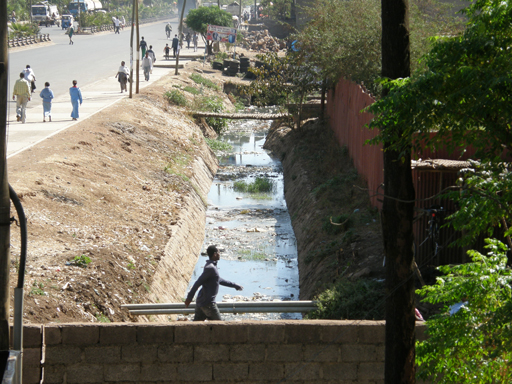
In developing countries, including Ethiopia, many rivers in urban areas are more like open sewers (Figure 5.6). The lack of sanitation and sewerage systems has a dramatic impact on urban watercourses. People use the rivers to dispose of all their wastes from homes, industries and commercial businesses. Wastewater from human settlements contains organic material and nutrients; industrial wastewater contains many different types of toxic pollutant. These make the water unsafe for humans to use for many purposes including drinking and irrigation, as well as harming the fish and other animals and plants living in the water. Any changes to the quality of surface water also affects groundwater because they are linked by the processes of the water cycle so pollutants from the surface will infiltrate down and contaminate soil and groundwater as well.
Solid waste
In many towns and cities solid waste management is inefficient or non-existent. Solid waste management means the proper collection, transfer, recycling and disposal of all the solid material we throw away, including plastics, paper and cardboard, food wastes, electrical waste, etc. It also includes industrial, hospital and institutional wastes which often contain pathogens as well as hazardous and toxic chemicals, which need special care.
Urban waste often ends up in illegal dumps on streets, open spaces, wastelands, drains or rivers. This is frequently a problem in peri-urban areas, which are convenient for dumping wastes because of the availability of open space and ease of access from central urban areas. This can lead to the pollution of groundwater and surface waters which may be used as a source for drinking water. Sometimes the wastes are collected and taken to legalised waste disposal sites but these are not always properly managed to protect water bodies and groundwater.
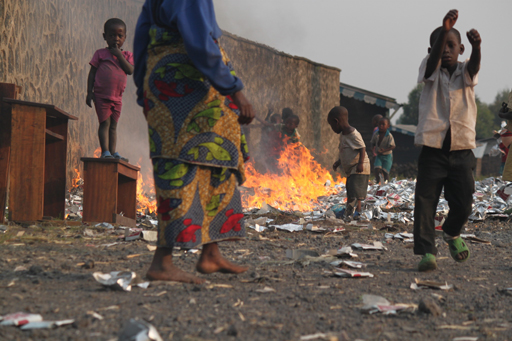
The combustion of solid waste creates yet another environmental problem. People want to get rid of the wastes and they will burn them in their backyards if there is no collection system .
Air quality
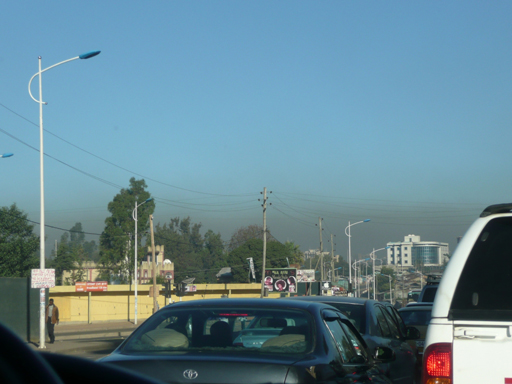
Air quality in towns and cities is frequently very poor as a result of air pollution from many different sources . These include:
- vehicle exhausts
- smoke from domestic fires
- outputs from factory chimneys
- diesel-powered generators
- dust from construction works and city streets.
Poor air quality has a significant impact on the health of many urban residents as well as leaving a damaging and unsightly layer of dust on plants, buildings and other surfaces.
Health
Urbanisation can have both positive and negative effects on health. The main benefits are associated with easier access to hospitals, clinics and health services in general. If you live close to these services you can reach a doctor in minutes rather than hours or days, so this improves emergency care and general health. There are also benefits from easier access to sources of information such as radio and television which may be used to communicate information about health to the general public. For example, women living in towns and cities are more likely to be informed about family planning, which results in reduction in family size and less frequent childbirth, with consequent benefits to general health.
However, urban life can also damage your health. Poor environment, housing and living conditions are the main reasons for poor health in urban areas. Contamination of water sources can cause epidemics of waterborne disease. Close proximity to other people can make the spread of many types of infectious disease more likely. The polluted air can also cause respiratory disease and contribute to premature deaths among more vulnerable sections of the population such as older people and children.
Food
Population movements also put pressure on food supplies and on food distribution. As people migrate to the cities, they tend to use purchased food instead of their own crops and this makes them more vulnerable to changes in food prices. As the population grows and the demand for water and land increases, it becomes difficult to increase food production in a sustainable way. The increase in urban demand, combined with a loss of agricultural land, means more pressure on rural people to produce food for the growing number of urban people.
Furthermore, pollution from urban areas can disrupt food supply. For example, fisheries are often damaged by urban domestic wastes and liquid effluents from city-based industries. (Effluent is another word for wastewater that flows out from a source.) In several Ethiopian cities, such as Bahir Dar, Hawassa, Bishoftu and others, untreated wastes are dumped into nearby lakes, which can damage the fish stocks

The process of urbanisation has positive as well as negative economic and social changes. The positive effects include economic development, and education. However, urbanisation places stresses on existing social services and infrastructure. Crime, prostitution, drug abuse and street children are all negative effects of urbanisation. Also there tends to be a lack of social support for children in school and home by their hard-working, usually poor, parents. Inadequate income, overcrowded housing and poor living conditions create a fertile ground for the development of violence. Violent crime is more visible in the cities than in rural areas and it affects people’s everyday life, their movements and the use of public transport. Crime in the city can create a sense of insecurity in its inhabitants. This unsafe feeling in city streets separates residential areas into higher-income and lower-income groups, which reduces the sense of community and forms areas with dissimilar incomes, costs and security levels.
In the next study session we will look at some of the ways in which these problems and challenges can be addressed by considering the future demands for urban living and by taking a planned approach to the development of new urban areas.
Summary of Study Session 5
In Study Session 5, you have learned that:
- Urbanisation is a global trend reflecting the growing population of the world. The urban populations of less-developed countries are currently increasing at a faster rate than those of more-developed countries.
- Urbanisation results from a natural increase in the population and rural to urban migration.
- People migrate to towns and cities in hope of gaining a better standard of living. They are influenced by pull factors that attract them to urban life, and push factors that make them dissatisfied with rural living.
- Urban living is associated with better employment and education opportunities, better health, greater access to social services and opportunities for social and cultural activities.
- Uncontrolled migration and rapid urban growth are associated with increasing urban poverty and inequality and rises in slum and squatter populations. These people usually have inadequate water supply and sanitation services.
- Urbanisation affects the physical environment through the impacts of the number of people, their activities and the increased demands on resources.
- Urbanisation has negative consequences on health due mainly to pollution and overcrowded living conditions. It can also put added pressure on food supply systems.
- The pressures of urban living may lead to crime and other consequences of social deprivation.


Comments
Post a Comment